Kai Richter · 6 September 2026
Art and Activism Merge as Widefeld Residents Explore Climate Initiatives Through Local Exhibitions
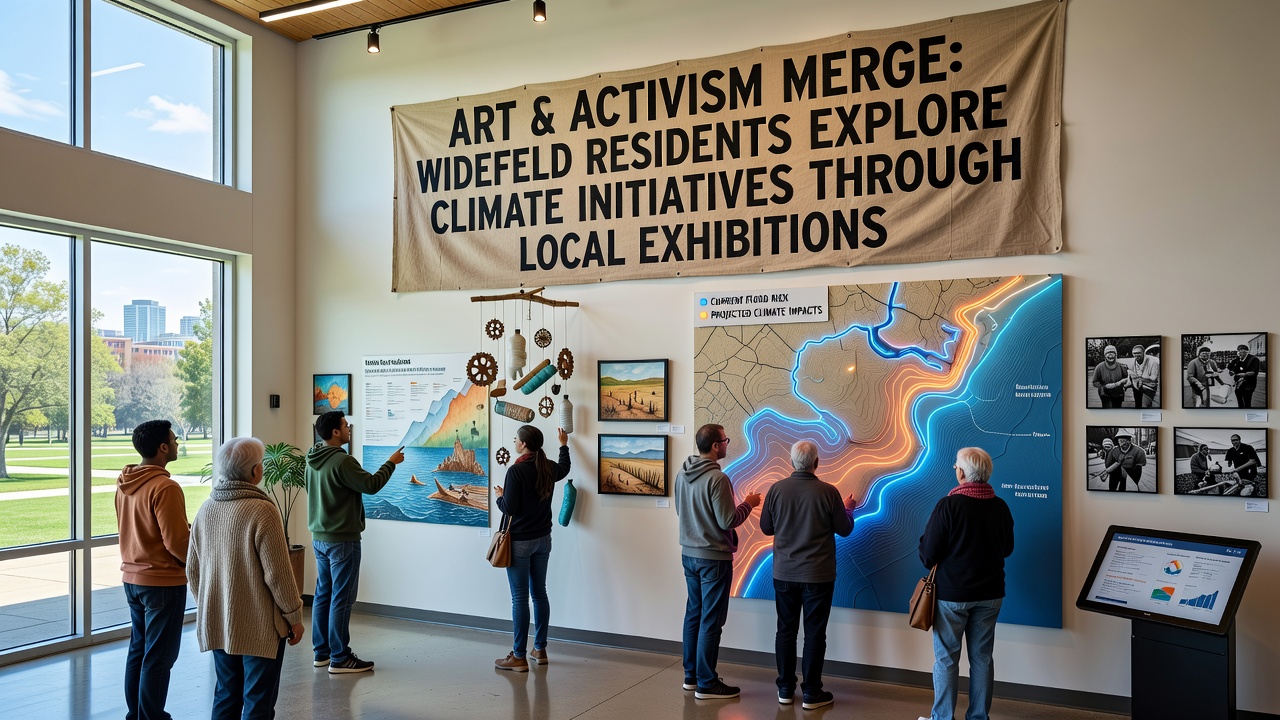
Widefeld residents have turned local exhibition spaces into venues where artistic expression intersects with climate action planning, and community groups now coordinate displays that highlight practical initiatives such as renewable energy adoption and urban green space development. These exhibitions feature installations built from recycled materials alongside data panels that track local carbon reduction targets, while visitors receive information on upcoming municipal programs scheduled for implementation through 2026.
Community Exhibitions Take Shape
Local artists collaborate with environmental organizations to produce works that illustrate specific climate strategies, and one series of panels documents the expansion of solar panel installations across residential rooftops in Widefeld districts. The displays incorporate interactive elements where attendees calculate personal energy savings based on current utility data, and organizers schedule guided tours that connect each artwork directly to measurable outcomes such as reduced emissions figures reported by regional monitoring stations.
Exhibition content draws from records maintained by the European Environment Agency, which compiles statistics on municipal climate efforts across member states, and Widefeld coordinators reference those datasets to ensure accuracy in the presented metrics. Participants learn about water conservation methods through sculptural representations of catchment systems, while accompanying text explains how these approaches align with broader targets set for September 2026 completion dates.
Artworks Highlight Practical Initiatives
One prominent installation recreates a neighborhood street using salvaged components to demonstrate permeable pavement benefits, and this piece sits beside charts that show stormwater management improvements recorded in similar Widefeld projects. Another exhibit uses projected light sequences to simulate temperature changes over the next decade, drawing from climate modeling produced by Environment and Climate Change Canada researchers who have studied comparable mid-sized communities.

Residents contribute personal accounts of participation in local tree-planting drives, and these stories appear alongside photographs that track canopy growth rates measured at regular intervals. Exhibition staff maintain logs of visitor questions, which later inform adjustments to future displays scheduled before the September 2026 milestone events.
Engagement Expands Through Partnerships
Schools in Widefeld integrate exhibition visits into environmental studies curricula, and students produce supplementary materials that extend the themes into classroom projects focused on waste reduction tracking. Business owners sponsor sections of the displays that explain energy efficiency upgrades already underway in commercial buildings, and these contributions appear next to verified savings data collected through utility partnerships.
Organizers coordinate with academic institutions to verify all numerical claims, and one collaboration with researchers from the University of Melbourne has supplied comparative analysis of art-based outreach methods used in Australian cities facing similar climate challenges. This cross-regional input helps refine presentation formats without altering the core focus on Widefeld-specific initiatives.
Future Events Build on Current Momentum
Planning documents indicate that September 2026 will feature expanded exhibition programming that incorporates live demonstrations of composting systems and electric vehicle charging infrastructure, and these additions will connect directly to ongoing installation themes. Attendance records from prior events show steady growth in participation numbers, which coordinators attribute to word-of-mouth promotion within neighborhood networks.
Local government offices supply updated progress reports that appear in rotating digital displays, allowing visitors to compare baseline measurements from earlier years against current indicators. This structure keeps the exhibitions aligned with official timelines while giving residents direct access to the information needed for continued involvement.
Conclusion
Widefeld exhibitions continue to serve as gathering points where artistic installations convey details of climate initiatives in accessible formats, and the integration of verified data supports informed community participation. As preparations advance toward September 2026, the pattern of combining visual elements with factual reporting remains central to how residents track and contribute to local environmental efforts.